De Facto Segregation
De Facto Segregation:
De facto segregation during the Civil Rights era (1954-1968) referred to racial separation that happened without legal enforcement but was maintained through customs, social practices, and economic conditions. It was significant because, despite laws outlawing segregation, African Americans still faced discrimination in housing, education, and employment. This type of segregation highlighted the challenges of achieving true racial equality and the limitations of legal changes alone. Today, de facto segregation still matters as it can affect access to quality education and job opportunities, often seen in neighborhoods where racial groups are divided. For example, in some cities, schools remain largely segregated because of housing patterns, impacting the quality of education and resources available to students based on their neighborhood.
Practice Version

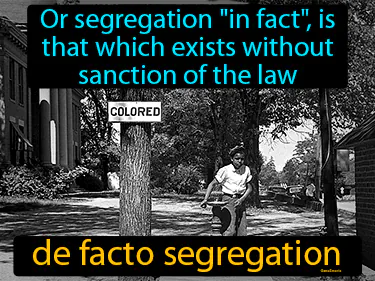
De Facto Segregation: Or segregation "in fact", is that which exists without sanction of the law. De facto segregation refers to racial separation that occurs in practice, even if not legally required, often as a result of social, economic, or demographic factors.