Dawes Plan
Dawes Plan:
The Dawes Plan was important because it helped stabilize Germany's economy by reorganizing its reparation payments, which in turn boosted the European and global economy during the 1920s. This plan highlighted the idea of international cooperation to solve economic problems, a concept still relevant today as countries work together to address global issues like trade and financial crises. The plan also showed the importance of balancing debt management with economic growth, a lesson that continues to influence how governments and individuals handle finances. For example, when people take loans, they often plan payments in a way that allows them to maintain a stable financial situation, similar to how the Dawes Plan structured Germany's payments. The concept of cooperation and careful financial planning remains a part of everyday life, affecting decisions like budgeting, international policies, and even how countries respond to economic challenges.
Practice Version

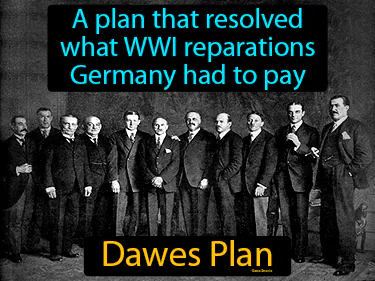
Dawes Plan: A plan that resolved what WWI reparations Germany had to pay. Dawes Plan. The Dawes Plan was a 1924 agreement that restructured Germany's reparations payments after World War I to make them more manageable and to stabilize the German economy.