Glasnost
Glasnost:
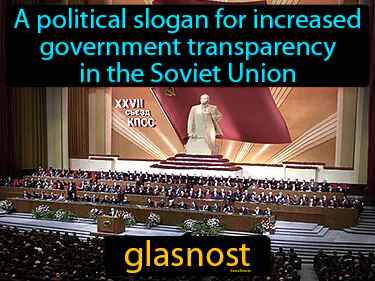
Glasnost, introduced by Soviet leader Mikhail Gorbachev in the 1980s, aimed to make the government more open and transparent, responding to years of political secrecy and corruption. During the conservative era of the 1980s and early 1990s, glasnost was crucial as it encouraged freedom of speech, reduced censorship, and allowed people to discuss political and social issues more openly. This openness was important because it paved the way for reforms and helped ease Cold War tensions. Today, glasnost is relevant because it reminds us how transparency in government encourages trust and accountability, which are vital for a healthy democracy. For example, when local governments make their meetings open to the public and share information online, it helps citizens feel informed and involved in decision-making, fostering a stronger community.
Practice Version

Glasnost: A political slogan for increased government transparency in the Soviet Union glasnost. Glasnost was a policy introduced by Mikhail Gorbachev in the 1980s to promote openness and transparency in government activities.