Slave Trade
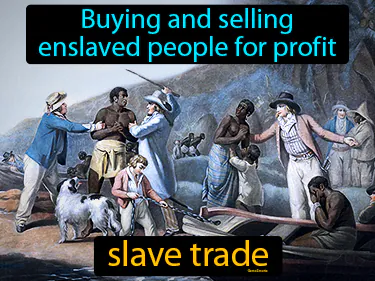
Slave Trade:
The slave trade was crucial to the economy of the colonies, especially in the Southern states where agriculture depended on enslaved labor. It highlighted racial and ethical tensions, as it was based on the belief that one race could dominate another for economic gain. These ideas of inequality and racism have persisted and continue to affect society today. For example, discussions about racial justice and inequality often trace back to the legacies of slavery and the slave trade. Understanding this history helps people recognize why movements for equality and justice remain important in our daily lives, influencing laws, education, and social interactions.
Practice Version

Slave Trade: Buying and selling enslaved people for profit. Slave trade. The slave trade was the historical practice of capturing, transporting, and selling people as slaves for economic gain.