Trust
Trust:
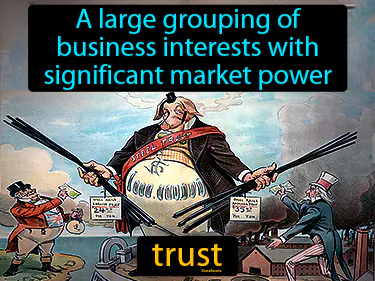
During the Industrialization era from 1870-1900, trusts were large business combinations that sought to control markets and reduce competition. They were important because they allowed companies to dominate industries, set prices, and maximize profits, often at the expense of consumers and small businesses. Trusts responded to the need for efficiency and growth in a rapidly industrializing economy but led to public concern over monopolistic practices and lack of fair competition. Today, the concept of trusts is still relevant as it relates to modern-day monopolies and antitrust laws, which aim to prevent companies from becoming too powerful and harming consumers. For instance, if a single company controlled most internet services, it could charge high prices and provide poor service, directly affecting people’s access to information and communication.
Practice Version

Trust: A large grouping of business interests with significant market power. Trust. In history, a trust is a combination of companies formed to reduce competition and control prices.