Oligarchy
Oligarchy:
In Ancient Greece, an oligarchy was a government where a small group of wealthy and influential people held power, often coming from noble families. This structure responded to the need for stability and control in city-states where democracy or monarchy might have been impractical. Oligarchies were important because they allowed for quick decision-making by experienced leaders, although they often ignored the needs of the poorer population. Today, the concept of oligarchy still matters because it can be seen in modern scenarios where a small group of people, like wealthy business owners, influence political decisions. For example, if a few rich individuals fund political campaigns or lobby for laws, they might shape policies that affect jobs, healthcare, and education, impacting everyone’s daily life.
Practice Version

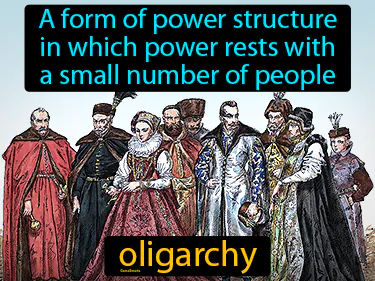
Oligarchy: A form of power structure in which power rests with a small number of people. Oligarchy. In history, an oligarchy is when a small group of people, often wealthy or influential, control a country or organization.