Embargo Act
Embargo Act:
The Embargo Act of 1807 was a significant event during the Jefferson Era, as it attempted to prevent American involvement in the conflicts between Britain and France by stopping all foreign trade. This act highlighted the tensions between maintaining national security and protecting economic interests, issues that are still relevant today. For example, modern trade sanctions are used similarly to influence international behavior while balancing domestic economic impacts. The Embargo Act connects to people's lives now as it demonstrates the challenges governments face in regulating trade without harming their own economy. This is similar to how modern trade policies and tariffs can affect the price of everyday goods, influencing what people can afford to buy.
Practice Version

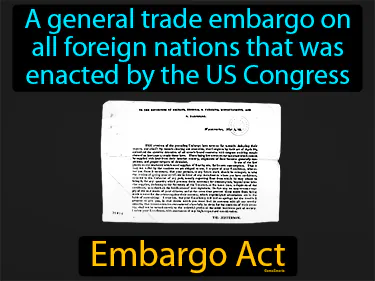
Embargo Act: A general trade embargo on all foreign nations that was enacted by the US Congress. Embargo Act. The Embargo Act of 1807 was a law that stopped American ships from trading with foreign countries to avoid conflicts and pressure Britain and France during the Napoleonic Wars.