Strike
Strike:
During the early 1800s, as the United States grew, strikes became crucial in highlighting the struggles of workers seeking better pay and conditions. These events underscored tensions between laborers and employers, emphasizing the need for fair treatment, which is a topic still relevant today. Strikes from that era paved the way for labor laws and workers' rights, such as the right to a minimum wage and safe working environments. Today, these ideas affect our lives by ensuring that people can work in safe conditions and receive fair pay, which helps maintain a balanced economy. For example, when someone works a job, they can expect certain protections and benefits because of these historical struggles.
Practice Version

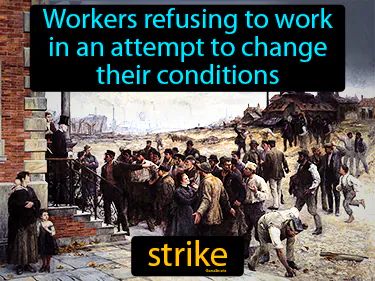
Strike: Workers refusing to work in an attempt to change their conditions. Strike. In history, a strike is when workers stop working to demand better wages, hours, or conditions.