Transportation Revolution
Transportation Revolution:
The Transportation Revolution from 1790 to 1860 in the North was crucial because it dramatically improved the speed and efficiency of moving goods and people. With innovations like canals and railroads, cities grew, markets expanded, and it fueled the Industrial Revolution by linking raw materials to factories and products to consumers. This period highlighted tensions between regions, as the North advanced industrially while the South remained more agricultural, a divide that echoes in today's economic disparities between different areas. The revolution's legacy is evident in today's transportation networks, like highways and public transit, which continue to influence where people live and work. For an average person, the convenience of commuting to work, receiving packages quickly, or accessing a wider variety of products at stores is a direct result of these historical developments.
Practice Version

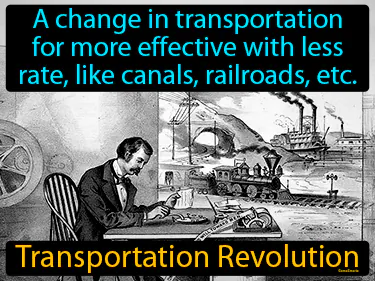
Transportation Revolution: A change in transportation for more effective with less rate, like canals, railroads, etc. Transportation Revolution. The Transportation Revolution was a period in history when new transportation systems like canals and railroads dramatically improved the movement of goods and people.