Total War
Total War:
Total war during World War I meant that nations used all their resources, including civilians, to support the war effort, blurring the lines between soldiers and ordinary people. This approach was crucial because it responded to the need for vast amounts of weapons, food, and manpower to sustain the lengthy and intense conflict. In the Russian Revolution, total war contributed to widespread hardship, helping to fuel unrest and eventually leading to the overthrow of the government. Today, the concept of total war reminds us of the significant impact war can have on all aspects of society, not just the battlefield. For example, during the COVID-19 pandemic, we saw similar mobilization efforts where everyone, from healthcare workers to grocery store employees, played essential roles in combating the crisis, showing how collective effort is necessary to overcome large-scale challenges.
Practice Version

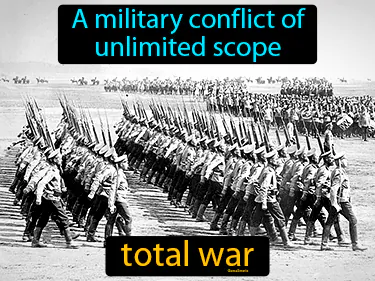
Total War: A military conflict of unlimited scope. Total war. Total war involves mobilizing all of a nation's resources and targeting both military and civilian infrastructure to achieve complete victory.