Compromise Of 1877
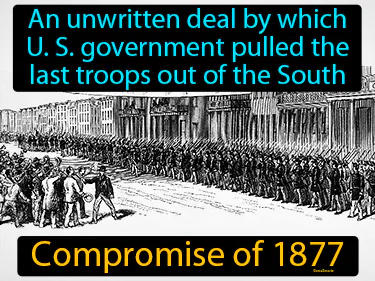
Compromise Of 1877:
The Compromise of 1877 was crucial because it marked the end of Reconstruction, a period aimed at rebuilding the South and ensuring rights for newly freed African Americans. By withdrawing federal troops, it essentially allowed Southern states to govern themselves without Northern interference, leading to the rise of discriminatory Jim Crow laws. This event highlights ongoing tensions about states' rights versus federal authority and issues of racial equality that are still relevant today. These ideas impact our daily lives through ongoing discussions about voting rights, civil rights, and equality, which affect how laws are made and enforced. For example, debates over voter ID laws and representation in government echo these historical issues, influencing how individuals participate in democracy.
Practice Version

Compromise Of 1877: An unwritten deal by which U.S. government pulled the last troops out of the South. Compromise of 1877. It marked the end of Reconstruction by withdrawing federal troops from the Southern states, allowing the Democrats to regain political control.