Segregation
Segregation:
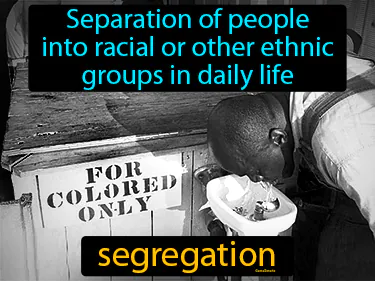
During The Gilded Age (1880-1920), segregation meant legally enforced separation of races, especially between white and Black people, in public spaces like schools, transportation, and neighborhoods. This practice responded to the end of slavery and was designed to maintain racial hierarchies and limit the social and economic progress of Black Americans. Segregation was significant because it institutionalized racism and inequality, affecting generations. Today, segregation still matters as its legacy can be seen in ongoing racial disparities in areas like education and housing. For example, many schools in the U.S. remain divided along racial lines, impacting access to resources and quality education for students of color.
Practice Version

Segregation: Separation of people into racial or other ethnic groups in daily life. Segregation. In history, segregation refers to the enforced separation of different racial groups in a community, often leading to unequal treatment and opportunities.