Competitive Exclusion

Example:
Imagine trying to share a single chair with someone at a crowded event. Just like two people can't comfortably sit in the same chair at the same time, two species cannot occupy the same niche in a habitat simultaneously. The chair represents the niche, and the two people represent the competing species; just as only one person can effectively use the chair, only one species can successfully thrive in a particular niche without outcompeting the other.
Practice Version

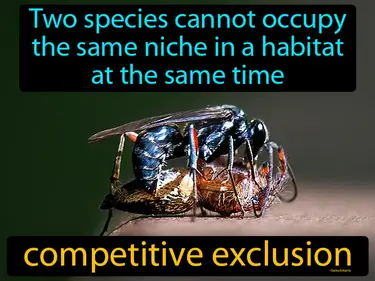
Competitive Exclusion: Two species cannot occupy the same niche in a habitat at the same time. Competitive exclusion. Competitive exclusion is when one species outcompetes another for resources, leading to the latter's decline or elimination.