Binomial Nomenclature
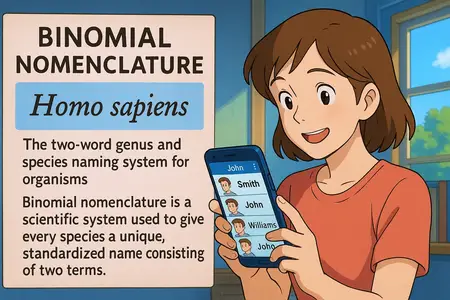
Example:
Imagine trying to find a specific contact in your phone when you have multiple friends with the same first name. This situation is similar to how scientists use binomial nomenclature to uniquely identify species, much like how you'd use both a first and last name to distinguish between your friends. Just as you might save a contact as "John Smith" to differentiate him from "John Doe," scientists use a two-part name, like "Homo sapiens," to ensure precision and avoid confusion among the millions of different organisms.
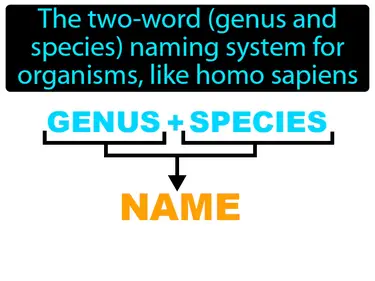
Practice Version
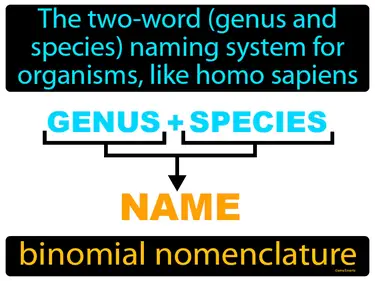
Binomial Nomenclature: The two-word genus and species naming system for organisms, like homo sapiens, is called binomial nomenclature. It is a scientific system used to give every species a unique, standardized name consisting of two terms.