Core
This knowledge is used in careers such as:
Teacher (Teaches Students) ~$55,000 - $95,000 - Number of jobs: 4,700,000 (324,500 Openings Per Year) +2% Growth
Civil Engineer (Designs Infrastructure) ~$65,000 - $110,000 - Number of jobs: 370,000 (23,600 Openings Per Year) +5% Growth
Mechanical Engineer (Designs Machines) ~$65,000 - $115,000 - Number of jobs: 290,000 (18,100 Openings Per Year) +9% Growth
Industrial Technician (Maintains & Repairs Machines) ~$50,000 - $75,000 - Number of jobs: 540,000 (54,000 Openings Per Year) +13% Growth
Project Manager (Coordinates People to Build Something) ~$65,000 - $115,000 - Number of jobs: 1,000,000 (78,000 Openings Per Year) +6% Growth
Explore These Careers →

Example:
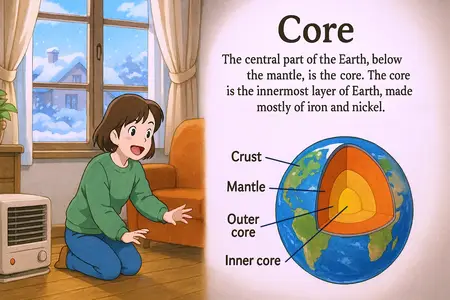
Imagine trying to find the source of warmth in a cozy, heated room on a cold winter day. Just like the heater is hidden away but essential for keeping the room warm, the Earth's core is hidden beneath layers but is crucial for the planet's heat. The heater in the room is analogous to the Earth's core, as both are central sources of heat that influence their surrounding environments, even though they are not directly visible.
Practice Version

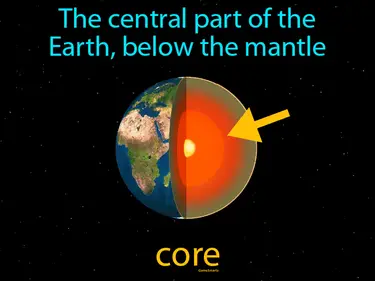
Core: The central part of the Earth, below the mantle, is the core. The core is the innermost layer of Earth, made mostly of iron and nickel, and it's responsible for generating our planet's magnetic field.