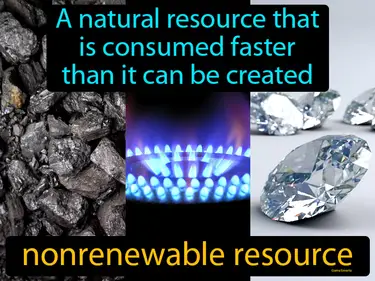
Nonrenewable Resource

Example:
Imagine you're at a party with a limited number of snacks, and everyone is eating them faster than they can be replenished. This situation is similar to how nonrenewable resources work: they are used up at a pace faster than nature can produce them. Just like how the snacks will eventually run out because they're being consumed faster than they can be restocked, nonrenewable resources like coal, oil, and natural gas deplete quickly because we use them faster than they naturally form.
Practice Version

Nonrenewable Resource: A natural resource that is consumed faster than it can be created is called a nonrenewable resource. In simple terms, nonrenewable resources, like coal and oil, can't be replaced quickly once they're used up.