Trait
Example:
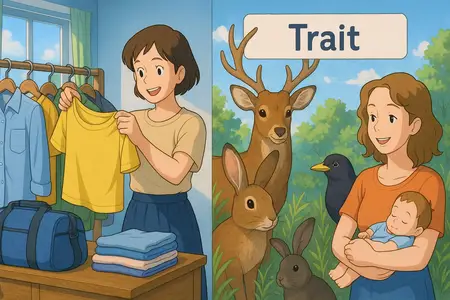
Imagine you're picking out clothes for a day that includes work, a casual dinner, and perhaps a gym session. Just as you choose different clothes for each occasion based on their suitability and functionality, organisms have traits – specific characteristics like fur color, beak shape, or enzyme function – that suit their particular needs and environments. Just as the right outfit helps you navigate diverse social settings comfortably, traits help organisms survive and thrive in their unique habitats, with each trait comparable to a piece of clothing that serves a specific purpose.
Practice Version
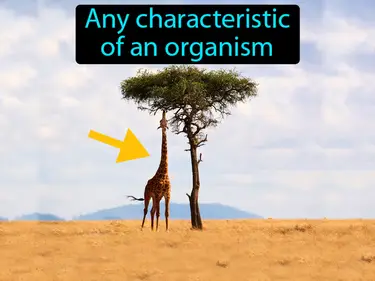
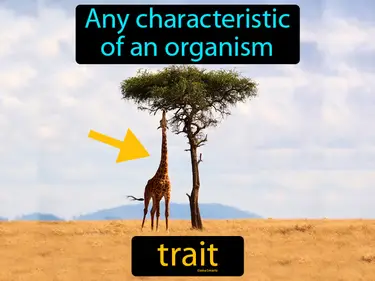
Trait: Any characteristic of an organism. Trait. In science, a trait is a specific feature or quality that can be inherited from parents, like eye color or height.