Smog

Example:
Imagine you're trying to clean out your messy room, but every time you think you've organized one section, you realize you've just shifted the clutter to another corner. This is similar to how smog forms in the atmosphere; different pollutants from cars, factories, and other sources mix together, creating a new kind of 'clutter' in the air. Just as moving items around in your room doesn't really solve the mess, the combination of chemicals in the air doesn't just disperse harmlessly but instead creates a complicated mix of pollutants that obscure visibility and harm health, much like the chaotic state of your reorganized room.
Practice Version

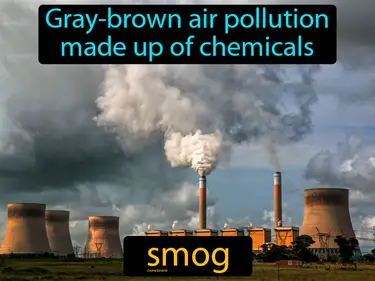
Smog: Gray-brown air pollution made up of chemicals. Smog. Smog is a type of air pollution created when sunlight reacts with pollutants in the atmosphere.