Chlorofluorocarbon

Example:
Imagine you have a small leak in your car tire that slowly lets out air, causing the tire to deflate over time. This situation is similar to how chlorofluorocarbons (CFCs) interact with the ozone layer in our atmosphere, gradually depleting it. Just as the tiny puncture in the tire leads to a slow but steady loss of air, CFCs released into the atmosphere break down ozone molecules, thinning the protective layer that shields Earth from harmful UV radiation.
Practice Version

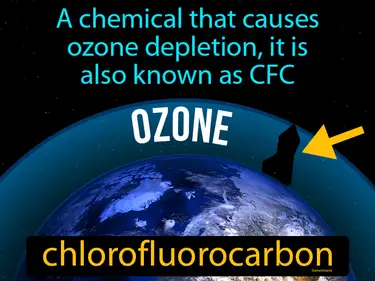
Chlorofluorocarbon: A chemical that causes ozone depletion, it is also known as CFC. Chlorofluorocarbon. Chlorofluorocarbon is a man-made compound used in products like aerosols and refrigerants that can damage the Earth's ozone layer.