Systemic Circulation

Example:
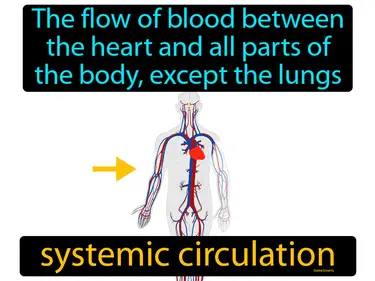
Imagine you're organizing a delivery system for a large house, where each room needs specific supplies and essentials except for the kitchen, which manages its own resources. This is similar to systemic circulation, where the heart acts as the central hub, sending 'deliveries' of oxygen-rich blood to every part of the body except the lungs, which have their own direct supply system. Just like you need a well-planned route to ensure each room receives its supplies efficiently, the heart pumps blood through a network of arteries and veins, ensuring every part of the body gets the nutrients and oxygen it needs to function, with the lungs managing their own 'deliveries' through pulmonary circulation.
Practice Version

Systemic Circulation: The flow of blood between the heart and all parts of the body, except the lungs, is called systemic circulation. Systemic circulation delivers oxygen-rich blood from the heart to the body's tissues and returns oxygen-poor blood back to the heart.