Incandescent Light

Example:
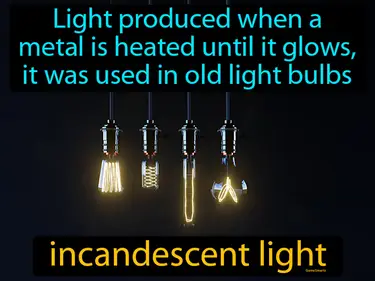
Imagine trying to get warm by wrapping yourself in a cozy blanket on a chilly night. Just like your body generates heat and transfers it to the blanket, causing it to warm up and provide comfort, an incandescent light bulb works by passing an electric current through a metal filament, heating it until it glows and emits light. The connection is that both scenarios involve applying energy to a material—your body to the blanket, and electricity to the filament—to produce a desired effect: warmth in one case and light in the other.
Practice Version

Incandescent Light: Light produced when a metal is heated until it glows, it was used in old light bulbs. Incandescent light is light that comes from heating a material until it glows.