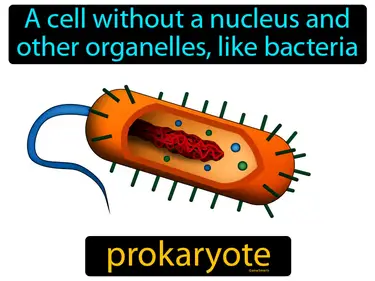
Prokaryote

Example:
Imagine trying to organize a large room full of various items without any shelves, drawers, or containers to help separate them. This is similar to how prokaryotic cells, like bacteria, function without a nucleus or other membrane-bound organelles to compartmentalize their internal components. Just as you'd need to manage the room by organizing items directly on the floor rather than using designated storage areas, prokaryotes have all their cellular activities, like DNA functions and metabolic processes, occurring freely within the cytoplasm, without the separation or specialization provided by organelles.
Practice Version

Prokaryote: A cell without a nucleus and other organelles, like bacteria, is called a prokaryote. Prokaryotes are simple, single-celled organisms without a nucleus.