Physical Property
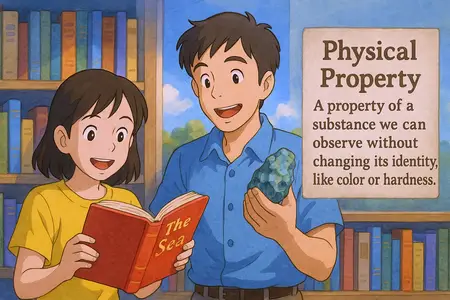
Example:
Imagine you’re trying to decide which book to read based solely on the cover design and title. Just as you can judge the book's cover and title without opening it to read the story inside, a physical property like color or hardness allows us to understand something about a substance without altering what it is at its core. In both cases, whether it’s judging a book by its cover or determining a substance’s color, you're making observations based on external characteristics that don’t require changing the actual content or identity of what's being observed.
Practice Version

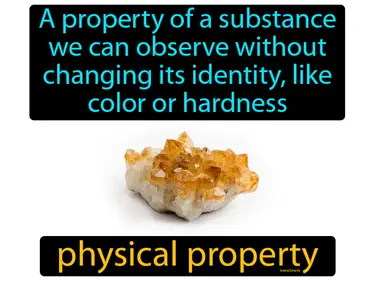
Physical Property: A property of a substance we can observe without changing its identity, like color or hardness. Physical property. In Science, a physical property is something you can see or measure about a substance without altering what it's made of.