Saponification
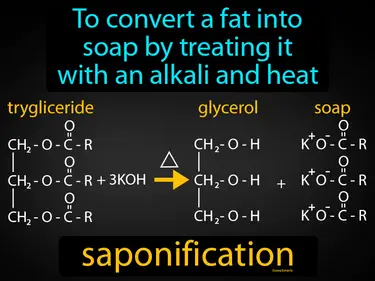
Saponification:
Imagine trying to clean a greasy pan with just water; it’s frustrating because the grease stubbornly clings to the surface. This is similar to the process of saponification, where fats (like the grease) are transformed into soap through the action of an alkali and heat, making them easier to wash away. Just as adding detergent to your cleaning routine breaks down the grease into smaller, removable particles, saponification breaks down fats into soap molecules that can easily mix with water and be washed away, effectively cleaning the pan.
Practice Version

Saponification: To convert a fat into soap by treating it with an alkali and heat. Saponification. Saponification is a chemical process where fats or oils react with an alkali to produce soap and glycerol.