Stamp Act
Stamp Act:
The Stamp Act of 1765 was a significant event because it was one of the first direct taxes imposed by Britain on its American colonies, sparking widespread protest. Colonists argued "no taxation without representation," highlighting the importance of having a say in government decisions, a principle that is still vital today. This act contributed to the growing desire for independence, eventually leading to the American Revolution and the birth of a new nation. Today, the idea of fair representation influences how citizens engage in democratic processes, like voting and protesting, to ensure their voices are heard. For example, when people vote in elections or sign petitions, they exercise their rights to influence government policies, just as colonists sought to do.
Practice Version

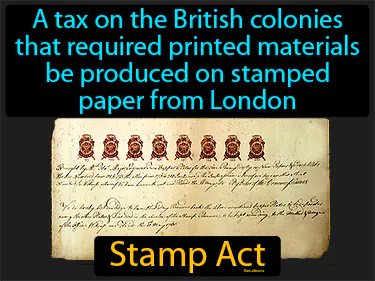
Stamp Act: A tax on the British colonies that required printed materials be produced on stamped paper from London. Stamp Act. The Stamp Act was a British law taxing printed materials in the American colonies, sparking colonial protest.