Missouri Compromise
Missouri Compromise:
The Missouri Compromise, passed in 1820, was crucial because it maintained the balance of power between free and slave states in the US Congress. This legislation highlighted the growing tensions between the North and South over slavery, which were key issues leading up to the Civil War. Today, the Missouri Compromise is a reminder of how divisive issues can challenge national unity. These historical tensions echo in current discussions about equality and justice, influencing debates over civil rights and social policies. These ideas impact daily life as people continue to advocate for fair treatment and equal opportunities for all, reflecting the ongoing struggle to balance differing perspectives within a united nation.
Practice Version

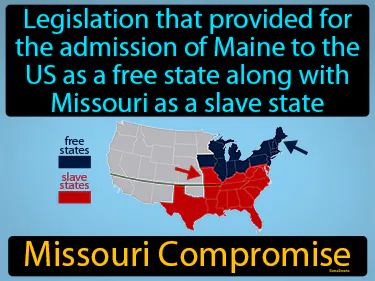
Missouri Compromise: Legislation that provided for the admission of Maine to the US as a free state along with Missouri as a slave state. Missouri Compromise. It was an agreement in 1820 that helped balance the power between free and slave states in the United States.