Sharecropping
Sharecropping:
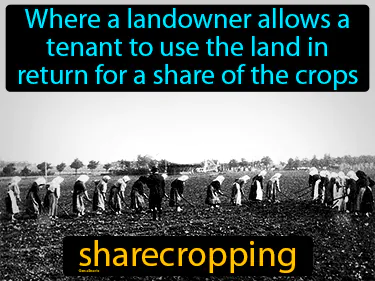
After the Civil War, many freed slaves and poor whites in the Southern United States needed work and landowners needed labor to farm their land. Sharecropping was a system where landowners allowed these workers, called tenants, to farm their land in exchange for a portion of the crops. This system was important because it provided a way for tenants to earn a living, but it often kept them in a cycle of debt and poverty due to unfair agreements. Today, the concept of sharecropping relates to modern-day gig economy jobs where workers might not own the resources they use but still rely on them for income. For example, a ride-sharing driver uses a company’s platform and car to earn money, but often faces expenses that can eat into their earnings, similar to how sharecroppers had to pay for seeds and tools.
Practice Version

Sharecropping: Where a landowner allows a tenant to use the land in return for a share of the crops. Sharecropping. In history, sharecropping was a system where farmers, often freed slaves, worked a portion of a landowner's land in exchange for a share of the harvested crops.