Thirteenth Amendment
Thirteenth Amendment:
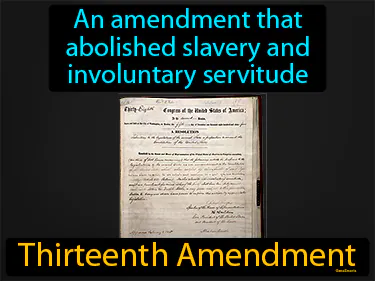
The Thirteenth Amendment, passed in 1865, was crucial because it legally ended slavery in the United States, following the Civil War. It addressed deep-rooted tensions between states over the issue of slavery, which was a major cause of the war. This amendment set a precedent for future civil rights advancements, emphasizing equality and freedom, principles that continue to shape American society. Today, its legacy impacts daily life by supporting laws and policies against discrimination, ensuring that everyone has equal opportunities. For example, in schools and workplaces, people are protected from being treated unfairly based on race, thanks to the groundwork laid by the Thirteenth Amendment.
Practice Version

Thirteenth Amendment: An amendment that abolished slavery and involuntary servitude. Thirteenth Amendment. The Thirteenth Amendment to the United States Constitution officially ended slavery in the U.S. in 1865.