Collective Bargaining
Collective Bargaining:
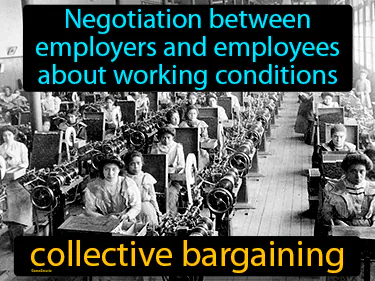
During the Industrialization period from 1870 to 1900, collective bargaining became crucial as workers sought to improve poor working conditions, low wages, and long hours in factories. With rapid industrial growth, many employers prioritized profit over employee well-being, leading workers to band together through unions to negotiate better terms collectively. This movement was vital for securing rights and protections for workers, setting the foundation for labor laws. Today, collective bargaining remains significant as it allows workers in various industries to negotiate fair wages, benefits, and safe working conditions. For example, teachers' unions often use collective bargaining to secure smaller class sizes and better resources, directly impacting the quality of education students receive.
Practice Version

Collective Bargaining: Negotiation between employers and employees about working conditions. Collective bargaining. In history, collective bargaining refers to the process where workers unite to negotiate with employers for better wages and conditions.