Chinese Exclusion Act
Chinese Exclusion Act:
The Chinese Exclusion Act of 1882 was the first major law in the United States to restrict immigration based on nationality, highlighting significant racial and economic tensions during a time of rapid urbanization. It reflected fears that Chinese laborers were taking jobs from American workers, a concern that still surfaces today in discussions about immigration and employment. The Act set a precedent for future immigration policies and influenced the way different ethnic groups were perceived and treated in the U.S. Today, debates about immigration often involve similar themes of economic competition and cultural differences, affecting how communities are formed and interact. An average person might experience these impacts through conversations about job opportunities, cultural diversity in neighborhoods, or political discussions about immigration policy.
Practice Version

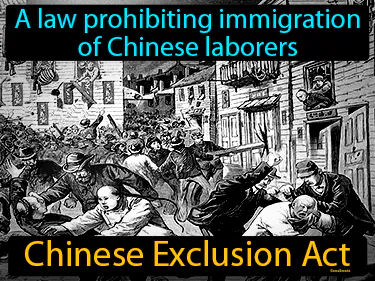
Chinese Exclusion Act: A law prohibiting immigration of Chinese laborers. Chinese Exclusion Act. The Chinese Exclusion Act was a U.S. law passed in 1882 that banned Chinese laborers from immigrating to the United States.