Hepburn Act
Hepburn Act:
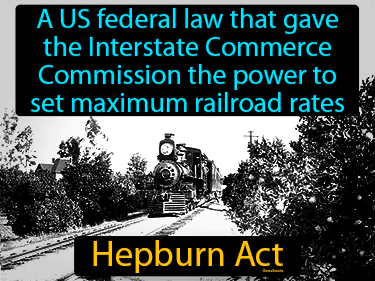
The Hepburn Act, passed in 1906, was important during the Progressive Era because it gave the Interstate Commerce Commission (ICC) the power to set maximum railroad rates, helping to curb unfair practices by railroad companies. This Act highlighted the tension between big businesses and government regulation, an issue that persists today in debates about how much control the government should have over industries like healthcare and technology. By ensuring fair pricing, the Act aimed to protect consumers and small businesses from exploitation, a principle that still influences consumer protection laws today. For an average person, this means having some assurance that essential services, like transportation and utilities, remain affordable and fair. When you pay a reasonable price for your train ticket or electricity bill, it reflects the ongoing impact of regulations inspired by the Hepburn Act.
Practice Version

Hepburn Act: A US federal law that allowed setting maximum railroad rates. Hepburn Act. The Hepburn Act of 1906 gave the Interstate Commerce Commission the power to regulate railroad rates, enhancing federal control over the railroads to prevent unfair pricing.