Sixteenth Amendment
Sixteenth Amendment:
The Sixteenth Amendment, ratified in 1913 during the Progressive Era, allowed Congress to collect income taxes without dividing them based on state populations. This was important because it addressed the need for a more equitable tax system to fund federal programs and reduce reliance on tariffs, which disproportionately affected the poor. At the time, it responded to the growing demand for social reforms and public services as the U.S. was becoming more industrialized. Today, the income tax system established by the Sixteenth Amendment provides essential funding for public services like education, infrastructure, and healthcare. For example, when you attend a public school or visit a public library, these services are funded in part by the taxes collected thanks to this amendment, affecting you and your community by offering resources and opportunities.
Practice Version

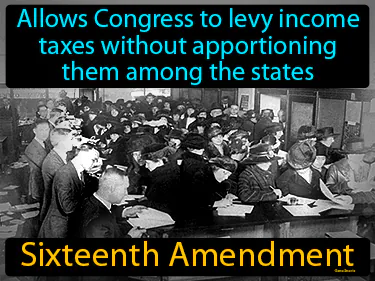
Sixteenth Amendment: Allows Congress to levy income taxes without apportioning them among the states. Sixteenth Amendment. The Sixteenth Amendment gave the U.S. government the power to collect income taxes directly from citizens.