Treaty Of Versailles
Treaty Of Versailles:
The Treaty of Versailles was important because it officially ended World War I by setting the terms for peace and punishing Germany with heavy reparations and territorial losses. This treaty highlighted tensions between countries, as many felt it was too harsh on Germany, leading to economic hardship and resentment. These tensions contributed to the rise of Adolf Hitler and eventually World War II, showing how unresolved conflicts can lead to future problems. Today, the treaty serves as a lesson in how peace agreements should be fair to prevent future conflicts, influencing modern diplomacy and international relations. For an average person, this means living in a world where countries strive to resolve disputes peacefully to maintain global stability and prevent war.
Practice Version

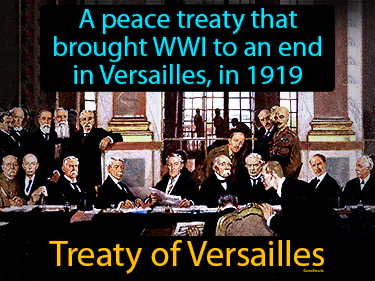
Treaty Of Versailles: A peace treaty that brought WWI to an end in Versailles, in 1919. Treaty of Versailles. It was an agreement that officially ended World War I, imposing penalties and territorial losses on Germany.