Price Support
Price Support:
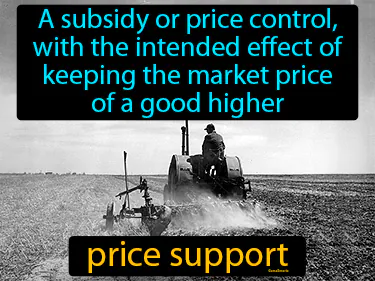
During The Great Depression, price support was crucial as it helped stabilize falling prices for agricultural products, which were plummeting due to overproduction and lack of demand. The government bought surplus crops to keep prices from dropping too low, ensuring farmers could earn enough money to survive and continue producing food. This was important because many farmers were at risk of losing their farms, which would have further worsened the economic crisis. Today, price supports still matter because they help stabilize markets for essential goods, such as dairy products, ensuring farmers can maintain their livelihoods despite market fluctuations. A real-life example is when milk prices drop; government programs might step in to buy excess milk or provide subsidies, helping dairy farmers stay in business and ensuring consumers still have access to milk.
Practice Version

Price Support: A subsidy or price control, with the intended effect of keeping the market price of a good higher. Price support. Historically, price support programs have been used to stabilize farmers' incomes by ensuring they receive a minimum price for their crops.