GI Bill Of Rights
GI Bill Of Rights:
The GI Bill of Rights, enacted in 1944, was crucial because it helped millions of World War II veterans reintegrate into civilian life by offering benefits like education, housing loans, and unemployment compensation. This law highlighted the idea that veterans deserved support for their service, setting a precedent for how societies care for those who serve in the military. It also exposed tensions around access to these benefits, as many Black veterans faced discrimination when trying to utilize them. Today, the GI Bill has evolved and continues to support veterans, illustrating the ongoing importance of providing resources for those transitioning from military to civilian life. On a daily level, the GI Bill's legacy means more opportunities for education and home ownership, which can help veterans and their families achieve stability and success, benefiting society as a whole.
Practice Version

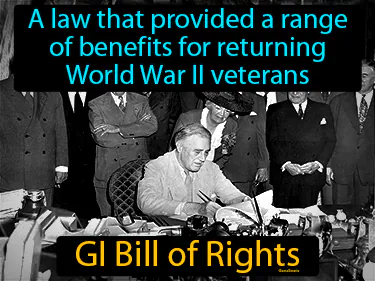
GI Bill Of Rights: A law that provided a range of benefits for returning World War II veterans. GI Bill of Rights. It helped veterans by offering education and housing benefits.