Unconditional Surrender
Unconditional Surrender:
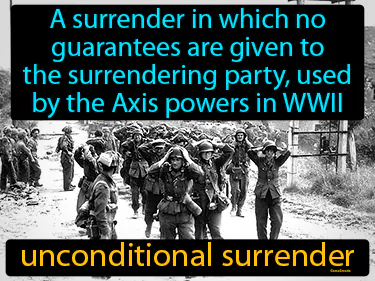
During World War II, the Allies, led by the US and the UK, demanded unconditional surrender from the Axis powers, meaning that countries like Germany and Japan had to give up without any promises about their future. This concept was important because it aimed to ensure that the defeated nations couldn't negotiate terms that might allow them to rebuild and start another war. Unconditional surrender prevented any ambiguity about the end of the war and aimed to bring a complete and lasting peace. Today, this idea connects to everyday life when we think about situations where someone must fully accept consequences without negotiating terms, like a student accepting the rules of a school after breaking them to restore order and fairness. In real life, this might mean a student accepting detention without arguing, understanding that their actions have consequences, which teaches responsibility and accountability.
Practice Version

Unconditional Surrender: A surrender in which no guarantees are given to the surrendering party, used by the Axis powers in WWII. Unconditional surrender means giving up completely without any promises or terms for the losing side.