Productivity
Productivity:
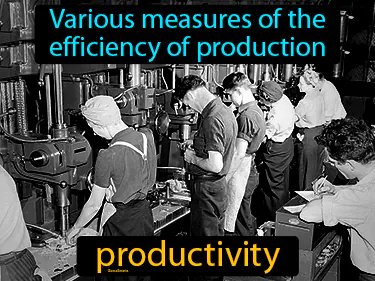
During the Postwar Boom from 1946 to 1960, productivity referred to the increased efficiency in producing goods and services, driven by technological advancements and better management practices. This was important because it responded to the need for rebuilding after World War II and supporting a growing population with more goods and better living standards. Higher productivity led to economic growth, more jobs, and higher wages. Today, productivity still matters because it affects how much can be produced with limited resources, influencing economic growth and individual well-being. For example, if a farmer uses efficient machines to plant and harvest crops, they can produce more food with less labor, leading to lower prices for consumers and better earnings for the farmer.
Practice Version

Productivity: Various measures of the efficiency of production. Productivity. In history, productivity measures how much goods or services are produced using a certain amount of resources, which helped drive economic growth and societal development.