Taft-Hartley Act
Taft-Hartley Act:
The Taft-Hartley Act, passed in 1947, was significant because it aimed to balance power between labor unions and employers during the postwar economic boom. It highlighted tensions between workers seeking better conditions and businesses wanting to limit union influence, a debate that continues today in discussions about workers' rights and corporate power. For example, the act's restriction on closed shops, where only union members could be hired, reflects ongoing debates over union membership and workers' freedom to choose. This impacts people's lives today as they navigate job markets where union presence can affect wages, benefits, and job security. Understanding these dynamics helps individuals recognize how labor laws influence their work environment and economic opportunities.
Practice Version

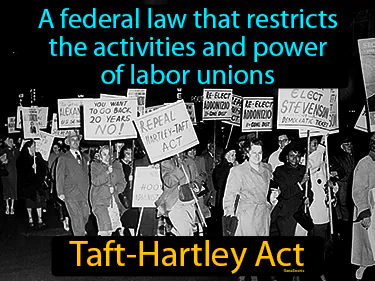
Taft-Hartley Act: A federal law that restricts the activities and power of labor unions. Taft-Hartley Act. The Taft-Hartley Act is a 1947 U.S. law that limits the power of labor unions by regulating their activities and requiring certain disclosures.