Second New Deal
Second New Deal:
The Second New Deal, introduced by President Franklin D. Roosevelt in the mid-1930s, was crucial because it expanded government efforts to address economic hardships during the Great Depression. It emphasized social welfare, leading to the creation of Social Security, which continues to support millions of retirees and disabled individuals today. This period highlighted tensions between government intervention and free-market policies, a debate that persists in discussions about how much the government should help during economic challenges. For example, Social Security benefits provide financial support for seniors, impacting decisions like retirement planning and daily budgeting. The Second New Deal's focus on public works projects also set a precedent for government investment in infrastructure, influencing job creation and economic stability in modern times.
Practice Version

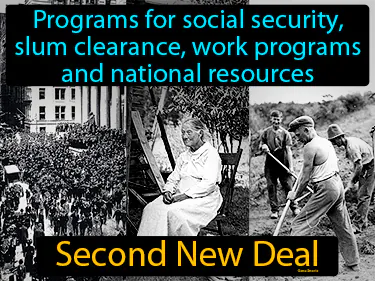
Second New Deal: Programs for social security, slum clearance, work programs and national resources. Second New Deal. The Second New Deal was a series of programs and reforms introduced by President Franklin D. Roosevelt in the 1930s to combat the Great Depression and improve social welfare.