Clean Air Act
Clean Air Act:
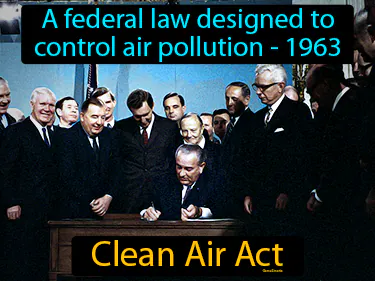
The Clean Air Act of 1963 was a significant part of the environmental movement during a time of social protest and change from the 1960s to 1980s. It responded to growing concerns about the harmful effects of air pollution on public health and the environment. The law aimed to reduce air pollution by setting standards for emissions from industries and vehicles. Today, the Clean Air Act remains crucial as it continues to protect our air quality, ensuring the air we breathe is safer and healthier. For example, because of this law, fewer pollutants are released from cars, which can lead to cleaner air in cities and less respiratory illness among residents.
Practice Version

Clean Air Act: A federal law designed to control air pollution - 1963. Clean Air Act. The Clean Air Act is a U.S. law that regulates air emissions to protect public health and the environment.