Tonkin Gulf Resolution
Tonkin Gulf Resolution:
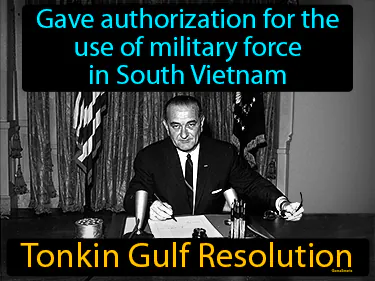
The Tonkin Gulf Resolution, passed in 1964, allowed President Lyndon B. Johnson to use military force in Vietnam without an official war declaration. This marked a significant escalation in the Vietnam War, increasing U.S. involvement and leading to widespread protests and debates over presidential power. It highlights the ongoing tension between executive power and congressional oversight, which is still relevant today when discussing military actions. This event reminds us of the importance of checks and balances in government, affecting how citizens view government decisions, especially involving military intervention. For an average person, it emphasizes the need to stay informed and engaged with how government actions are made, as these decisions can lead to significant impacts on global politics and personal lives.
Practice Version

Tonkin Gulf Resolution: Gave authorization for the use of military force in South Vietnam. Tonkin Gulf Resolution. The Tonkin Gulf Resolution was a 1964 Congressional decision that allowed the U.S. president to use military power in Vietnam without a formal declaration of war.