Organization Of Petroleum Exporting Countries
Organization Of Petroleum Exporting Countries:
The Organization of Petroleum Exporting Countries (OPEC) played a significant role during the "Crisis in Confidence" period in the 1970s, when oil prices skyrocketed and economies struggled. This crisis was largely due to OPEC's decision to cut oil production, leading to shortages and long lines at gas stations, especially in the United States. OPEC's control over oil prices highlighted the world's dependence on fossil fuels and prompted nations to rethink energy policies and seek alternative energy sources. Today, OPEC still influences global oil prices, impacting everything from the cost of gas for your car to the price of airline tickets. For example, if OPEC decides to decrease oil production, you might notice the price of gasoline at your local station increasing, affecting your family's transportation budget.
Practice Version

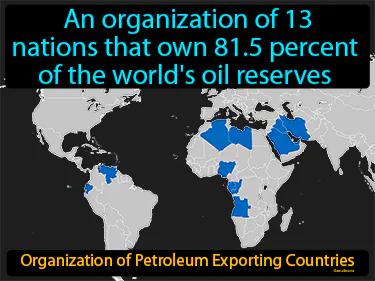
Organization Of Petroleum Exporting Countries: An organization of 13 nations that own 81.5 percent of the world's oil reserves. Organization of Petroleum Exporting Countries. The Organization of Petroleum Exporting Countries OPEC is a group formed in 1960 to coordinate and unify petroleum policies among member countries to ensure stable oil markets.