Observation

Example:
Imagine you're trying to find your way through a crowded shopping mall to locate a specific store. Just like navigating through the mall involves using your eyes to spot signs, your ears to catch announcements, and even your nose to follow the smell of a food court, using your senses to gather information involves the same process of collecting data from your environment. In both cases, whether you're finding a path to a store or gathering sensory information, you rely on various inputs to make informed decisions and navigate your surroundings effectively.
Practice Version

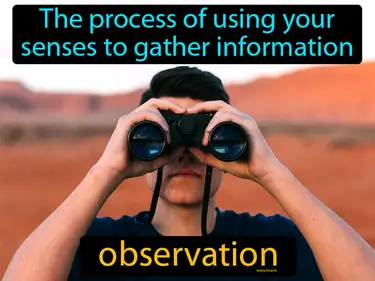
Observation: The process of using your senses to gather information. Observation. In science, observation is the act of noticing and describing events or phenomena in a careful and systematic way.