Thermohaline Circulation
Thermohaline Circulation:
Imagine you're at a crowded party where everyone starts in one room, but as the night goes on, some people move to other rooms based on their preferences for music or quieter conversations. This movement is similar to the thermohaline circulation in the ocean, where water moves around the globe due to differences in temperature and salt content, creating density gradients. Just like how partygoers shift to rooms that suit their preferences, water in the ocean circulates as it seeks regions of similar density, driven by changes in temperature (like the party's music) and salinity (like the room's noise level).
Practice Version

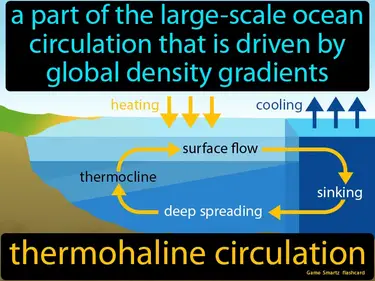
Thermohaline Circulation: A part of the large-scale ocean circulation that is driven by global density gradients. Thermohaline circulation. It is the movement of ocean water caused by differences in temperature and salt levels, which helps regulate Earth's climate.