Homologous Structure
Example:
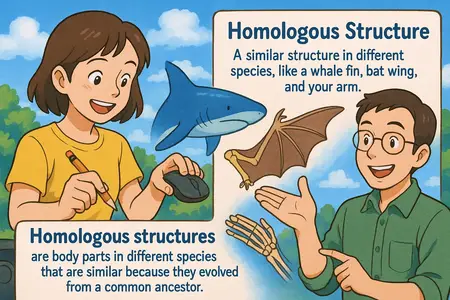
Imagine trying to use different tools like a pencil, a computer mouse, and a steering wheel — each designed for a specific task but all needing your hand to operate them. In the same way, homologous structures in different species, like a whale's fin, a bat's wing, and your arm, serve different purposes but share a common structural framework. Just as your hand adapts to grip, click, or steer, these limbs have evolved from a shared ancestral blueprint to perform unique functions, illustrating how a single foundational design can diversify to meet various needs.
Practice Version

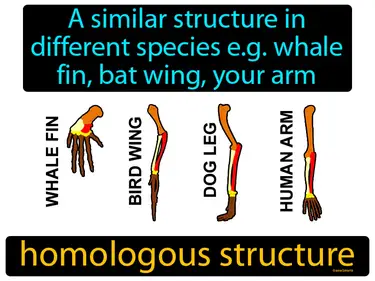
Homologous Structure: A similar structure in different species, like a whale fin, bat wing, and your arm. Homologous structure. Homologous structures are anatomical features in different species that share a common ancestry but may serve different functions.