Export
Export:
In colonial times, exports were crucial because they allowed colonies to sell goods like tobacco, cotton, and sugar to other countries, bringing in wealth and resources. This was important for the colonies' economic growth and for maintaining the relationship with their mother countries, like Britain. The concept of export addressed the need for colonies to find markets for their surplus goods and to acquire items they couldn't produce themselves. Today, exports remain vital as they help countries earn money and support jobs, impacting the everyday lives of people by influencing the economy and prices of goods. For example, if a local farmer exports apples to another country, it can lead to more jobs in your town and affect how much you pay for apples at the store.
Practice Version

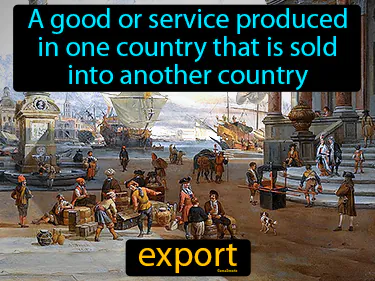
Export: A good or service produced in one country that is sold into another country. Export. In history, export refers to the trade of goods and resources, such as spices and silk, between ancient civilizations to boost their economies and cultural exchange.