Plate Tectonics
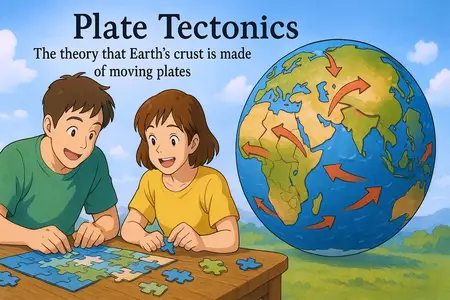
Example:
Imagine you're trying to fit a jigsaw puzzle together, but the pieces keep shifting slightly as you work. This is similar to how Earth's crust behaves, made up of large plates that are constantly moving and interacting with each other. Just like the puzzle pieces that don't stay in place, the plates of the Earth's crust are in constant motion, driven by forces beneath the surface, causing them to collide, pull apart, or slide past one another, much like how your jigsaw pieces might overlap or separate on the table.
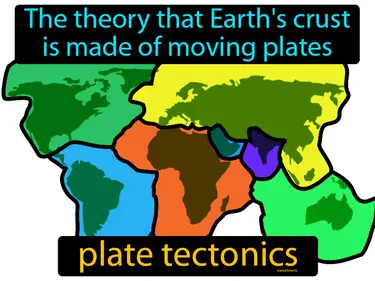
Practice Version
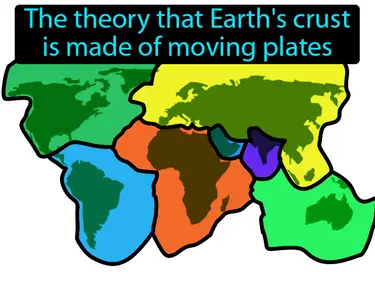
Plate Tectonics: The theory that Earth's crust is made of moving plates. Plate tectonics. It's the idea that Earth's surface is divided into large pieces that float and move on the molten layer beneath them.