Reservoir
Example:
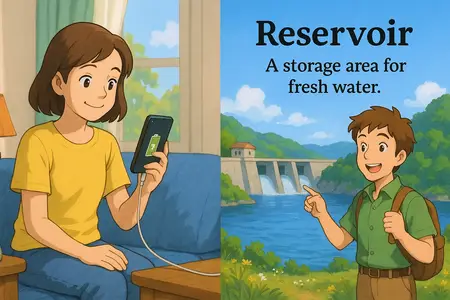
Imagine your smartphone battery draining faster than you'd like throughout the day. Just as you manage your phone's battery life by charging it during downtime to ensure you have enough power when needed, a reservoir stores fresh water during times of abundance to ensure there's enough supply during dry periods. The connection here is that both a smartphone battery and a reservoir act as storage solutions—one for energy and the other for water—helping us manage and distribute their resources efficiently based on demand and availability.
Practice Version

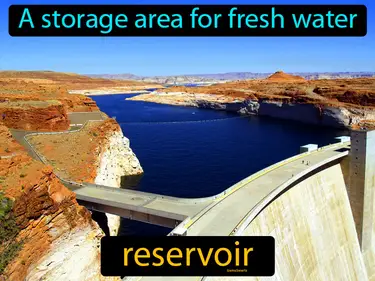
Reservoir: A storage area for fresh water. Reservoir. A reservoir is a large natural or artificial lake used to store water for various uses like drinking, irrigation, or power generation.