Dike

Example:
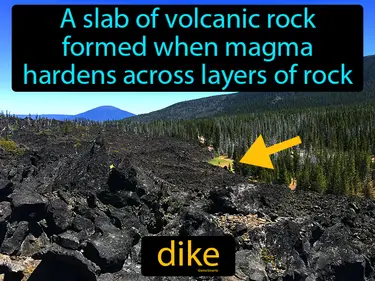
Imagine trying to fix a leaky roof by placing a strong piece of wood across the damaged area to stop the water from seeping through. Just like that piece of wood blocking the leak, a dike is formed when magma intrudes into cracks in the earth's crust and solidifies, cutting across existing rock layers. In this analogy, the roof represents the layers of rock, the leak is the crack or weakness in these layers, and the piece of wood is the hardened magma that forms the dike, effectively sealing the breach and providing a sturdy barrier.
Practice Version

Dike: A slab of volcanic rock formed when magma hardens across layers of rock. Dike. A dike is a sheet of rock that forms when magma cuts through and solidifies in cracks within other rock layers.