Longshore Drift

Example:
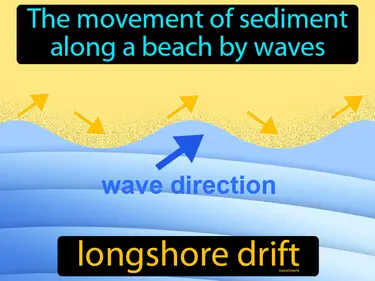
Imagine trying to organize a messy pile of papers on your desk, but as you stack them, a gust of wind keeps shifting them sideways. This is similar to how longshore drift works, where waves constantly push sediment along the coastline in a particular direction. Just as the wind moves your papers sideways, the angled approach of waves causes sediment to shift parallel to the shore, illustrating how external forces can redirect a seemingly straightforward process.
Practice Version

Longshore Drift: The movement of sediment along a beach by waves. Longshore drift. Longshore drift is when waves move sand and pebbles along the shore in a zigzag pattern.